Saturday, June 19, 2010

Who's deceiving now?

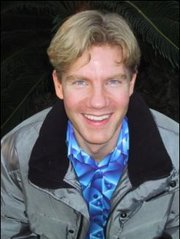
Ever since Bjorn Lomborg came on the scene the Green Left has hated him. I don't. Certainly not as a person, any interactions we have had have always been pleasant. I liked him when we meet and still like him, which is not to say I always agree with him. The Green Left does not share my opinion, but that is not surprising.

So they are quite excited that one of their own has penned an attack on Lomborg, merely because it attacks Lomborg. It is being hyped and praised by all the usual suspects. The Australian Broadcasting Corporation claims that Howard Friel, author of The Lomborg Deception, has "read Lomborg's books and thoroughly checked hundreds of Lomborg's sources and references" and "has concerns." Actually he wrote a hatchet job, which is more than being concerned. George Monbiot, in an attack on science writer Matt Ridley says that that Lomborg made so many errors "that an entire book—The Lomborg Deception by Howard Friel—was required to document them." That's an implicit endorsement of Friel's work though Monbiot's logic is bad. That an entire book was written doesn't mean that an entire book was needed to document errors. In fact, it is clear that Friel spends a great deal of time rebutting things Lomborg didn't say, or going off on tangents unrelated to what Lomborg actually did say. Newsweek gave The Lomborg Deception a less than rousing endorsement but said people should read it if they read Lomborg, much the way if you read the Talmud you ought to have Mein Kampf on hand, I guess.

This is just a blog, not an encyclopedia, so I can focus only on a small portion of Friel's "rebuttal" to Lomborg. Friel was particularly upset that Lomborg had said that the glaciers in the Himalayas would run down toward the end of the century, not much earlier. And he claimed that Lomborg only referenced the decline of the glaciers as being the result of the end to the Little Ice Age. Lomborg had quoted a scientific source for the claim that the end of Ice Age started the decline of the glaciers butFriel says that Lomborg "chopped' off the quote to delete a reference to human caused warming being involved. The problem was that the entire quote from Lomborg actually did mention global warming. Lomborg is less of a skeptic than I am, he does think there is human-induced warming and has said so. He even says it may have serious impact on humans, even though Friel claims to the contrary.

Friel quite specifically says that Lomborg was guilty of "misstating the projected life expectancy of the glaciers" in the Himalayas. Friel then goes on to say that Lomborg ignores the fact that: "Glaciers in the Himalaya are receding faster than any other part of the world and, if the present rate continues, the likelihood of the disappearing by the year 2035 and perhaps sooner is very high if the Earth keeps warming at the current rate." Friel, in his "scientific" rebuttal to the bad science of Lomborg makes this claim repeatedly.

He says: "the likelihood of them disappearing by the year 2035 and perhaps sooner is very high," and "the Himalayan glaciers will disappear 'by the year 2035 and perhaps sooner,' and not 'toward the end of the century,' as Lomborg wrote." And Friel claimed "the glaciers may disappear by 2035...." Four times in his rebuttal he attacks Lomborg for not saying the Himalayan glaciers will disappear by 2035 or sooner. And his source for this claim is the Intergovernmental Panel for Climate Change itself along with the World Wildlife Fund. Actually the IPCC was quoting the WWF so there weren't two sources and it is a tad bit dishonest to pretend there were.

Of course, Friel's "scientific" rebuttal falls apart because even the IPCC was forced to admit that the 2035 melt date was grossly in error and wasn't based on a peer-reviewed paper. It was a typographical error that just kept getting repeated by the alarmists. Let me recount the story of the 2035 claim. New Science magazine, it turns out, was the original published source used for this claim and they confessed that the claim was a "speculative comment" never submitted to peer review. And they were horrified that the IPCC printed the claim, second hand from the WWF without bothering to check it. They said: "We are entitled to an explanation" as to how this could happen, saying this was further damaging the reputation of the IPCC.

It also appears that the 2035 claim was floating about because of a paper by one V.M. Kotlyakov which estimated the shrinkage of the glaciers and said it expected them to melt by the year 2350. Someone, somewhere along the line, transposed the year 2350 into 2035. In fact, major glaciologists had all attacked the figure as being grossly out of line with the facts. The BBC reported that Michael Kemp of the World Glacier Monitoring System said that it is "not plausible that that Himalayan glaciers are disappearing within the next few decades."

The IPCC eventually admitted that the claim they had made was unfounded and unscientific. They released a statement saying that "clear and well-established standards of evidence, required by IPCC procedures were not applied properly" allowing "poorly substantiated estimates of rate and recession and date for the disappearance of Himalayan glaciers" to appear in their publication. The Guardian newspaper reported the "IPCC has said it regretted the mistake" and blamed it on "human failure."

So, according to Friel, one of Lomborg's major egregious "deceptions" was that he didn't realize the Himalayan glaciers would melt by 2035, as was documented by WWF and the IPCC. But Friel is the one who is wrong and not even the primary source he uses, to prove Lomborg was deceptive, actually thinks the evidence is accurate. Certainly on these claims Friel was wrong and Lomborg was right to not use the discredited claims.

I should note that this blog first reported on this error in 2009. I covered it again earlier this year, and then again a little later in 2010. Yale University Press published Friel's book in March, 2010. This means that it was already public knowledge that Friel's claim was wrong three months prior to the publication of his book, at the very least. Yet it was still published with Friel's accusations, based on totally bogus data, in place. Newsweek's review of Friel, the one that said people should keep the book on hand when reading Lomborg, says Friel got "tripped up" over the glacier assertion, acknowledges the IPCC admits they were wrong and says: "Friel criticizes Lomborg for saying they would disappear by the end of this century, arguing that he should have accepted the IPCC's date of 2034. Oops."

In reply to the "oops" comment from Newsweek, allow me to quote Arnold Beckoff, the main character in Torch Song Trilogy, in relation to "whoops," which is close enough for the point I want to make:
Whoops?
Ed, did you say "Whoops"?

"Whoops" is when you fall down an elevator shaft.

"Whoops" is when you skinny dip in a school of piranha.

"Whoops' is when you accidentally douche with Drano.

No, Ed.
This was no "Whoops."

This was an "AAARGH!".
But this "oops" raises some questions. Why is Friel being promoted as someone who thoroughly checked out all the facts to rebut Lomborg? Clearly, on something as obvious as the melting of the Himalayan glaciers Friel couldn't have bothered to check out the facts when he was attacking Lomborg. Had he done so he would have investigated what experts said about glaciers and quoted them. And they were rounding condemning the IPCC for getting the facts wrong. So what kind of checking did Friel do?

I suggest that all he wanted to do was show Lomborg "wrong," not because the research he had done proved this, but because he already knew Lomborg had to be wrong and went out searching for evidence to back up his conclusion. He was the proverbial judge with the death sentence already in his book merely seeking what charges to lay against the accused. To show Lomborg wrong he went no further than the IPCC. Yet, the moment the IPCCs was subjected to just a small amount of scrutiny it fell like a house of cards. Even this blogger knew this claim was false. So why didn't the meticulous, thorough, debunking Friel realize the error was wrong? Why did he include it in his book? The only answer I can give is that he didn't actually bother to subject the IPCC's claim to any scrutiny whatsoever, he took it on faith, the way fundamentalists believe the Bible. This isn't an "ooops," not by any means. It's an aaargh!

Labels: ,

Sunday, March 25, 2007

The Gospel according to St. Al.

I’ve been searching for Al Gore’s testimony before Congress on global warming. I wanted to see what he said and report on it. Along the way I went by the doom prophets of Grist, a rather Left the-end-of-the-world-is-coming environmental web site. The sort of people who worship the water Al Gore walks upon.

I found their report prior to his testimony where they were salivating in anticipation. Apparently this was something of a Greenies wet dream. They refer to his testimony, before he gave it, as “what may be the blockbuster hit of the political season”. Yawn! They say “there’s sure to be drama”. No doubt, fiction is often dramatic. Reality, however, often isn’t. Now remember this is the very publication that printed Gore’s statement that he exaggerates the facts in order to get people’s attention.

Of course they were upset that anyone disagreeing with St. Albert of Gore is allowed to counter the prophet at the same hearing. So they run down Prof. Lomborg and make a snide remark about how the subcommittee chairman “thinks Bjorn Lomborg is of commensurate intellectual and political status.”

Interesting. Why does “political status” matter at all? This is supposed to be a scientific debate. Or is it? By now you know that I contend that many of these warming hysterics (not all) are pushing these claims because of the perceived ability to impose socialism as part of the solution. They are control freaks. Regulations, taxes, controls, are their solutions to almost every problem they invent or exaggerate. In a previous era they would be in jackboots and brown shirts. Some are sincere. But many are not. By the way the same is true on the other side of the debate though the control freak label doesn’t apply as often.

As for being of “commensurate” intellectual status let’s explore that for a second. Commensurate means of equal status. The implication is that Gore has intellectual status and Prof. Lomborg does not. Odd since Lomborg is actually a university professor while Gore is a politician. Gore was born into a political family and has basically been a politician his entire life. He entered Congress in his late 20s.

His academic career, what there is of it, was that he went to university. Not taught just attended. He first studied English and then switched to his passion “government”. He took some theology courses, and it was actually there that he became an environmental catastrophist. He studied law but dropped out to run for office. That is his academic career. Unless I missed something he earned an undergraduate degree in government and nothing else.

Prof. Lomborg received an undergraduate degree from the University of Georgia (even if he is Danish). He got a Master’s degree from the University of Aarhus and then received a Ph.d from the University of Copenhagen. He was an assistant professor in statistics at the University of Aarhus then became an associate professor there. He then became an adjunct professor at the Copenhagen Business School. And in 2002 he was appointed to run the Danish Environmental Assessment Institute. It’s true Lomborg’s intellectual status is NOT commensurate with Mr. Gore, it is vastly superior. Of course the faithful won’t see it that way.

Since I reported what Lomborg said, and urged you to read the entire thing, I will do the same for Gore. (Note: PDF document.)

Now, Al, is no hysteric preaching doom. Not at all. He started out saying we face “a planetary emergency--a crisis that threatens the survival of our civilization and the habitability of the Earth.” “Global warming is real and human activity is the main cause. The consequences are mainly negative and headed toward catastrophic unless we act.”

Next he uses the old line about the Chinese word “crisis” meaning danger and opportunity. (Is that true or an urban legend? Anyone know? UPDATE: I checked. It is basically an urban legend. The literal meaning is “dangerous moment” which make sense. Poor Al didn’t even get that right.)

St. Al warns that “Hurricanes are getting stronger”. Actually they aren’t. (Also here.) “Sea levels are rising.” Well, yes and no. In some places they are rising and in others they are not (and here) and there is no change in the long term trends. “Mountain glaciers are receding around the world.” Technically yes, and they are also expanding around the world. Some expand, some contract and they are located all around the world. See here, here, here, here, here, here, and here.

After telling Congress that disaster and catastrophe is around the corner Gore then says: “New evidence shows that it may be even worse than we thought.” Worse than catastrophe?

Next he talks about how various political bodies are taking “action”. And he says that since “the climate crisis is, by its nature, a global problem” then “ultimately the solution must be global as well.” He next compares this to the crisis of “global Fascism” which England “and then America and our allies rose to meet”.

He told Congress that “This is not ultimately about any scientific discussion” but like the fight against Fascism “is a moral moment” “about who we are as human beings and our capacity to transcend our limitations and rise to meet this challenge.”

He assured everyone that “if we solve” this crisis “in the right way, we will save money and boost productivity.” No details about “the right way” were given. Next, he presented an image of future grandchildren begging to know why we didn’t save the planet for them, and how if we do save it, i.e. give politicians more control, they will thank us.

Odd that he compares this to fighting Fascism while simultaneously requesting greater control of the economy. Fascism is an economic system where the means of productions are privately owned but regulated and controlled by the state in the name of the “collective good”. In one sentence he invokes the moral courage of standing up to “global Fascism” while in the next he is basically advocating another form of global Fascism.

There is hyperbole, rhetoric, emotional images, sentimentality, fear mongering, etc . What is missing is science. But as he said “this is not ultimately about any scientific discussion”. Gore didn’t present testimony, not in the sense of offering evidence, he preached a sermon. Fundamentalists love sermons so the Green fundies will be shouting “Amen, brother”. The only thing missing was an altar call and the choir singing “Just as I Am” as sinners come down the sawdust trail promising to never emit carbon again.

As I’ve said repeatedly, go ahead and read the testimony yourself. Compare what Gore had to say, how he said it, and the evidence he presented (or failed to present) to that of what Lomborg said and the evidence he presented. With Lomborg’s testimony I said I left out the copious footnotes that present his sources. With Gore I didn’t but then I didn’t need to. Gore didn’t have any.

Given the quality of testimony from St. Al and that of Prof. Lomborg one can understand why Gore has refused to talk to Lomborg and why he refused to do an interview if Lomborg was allowed to forumulate any of the questions. Religion just doesn’t hold up to rational scrutiny well. And what Gore presents is apocalyptic religion at it’s best.

Photo: I admit it’s a little mean. It’s also amusing and the entertainment devil on the one shoulder won the debate over the niceness angel on my other shoulder. Sorry Al. By the way I actually did love this speech you gave on the Constitution. It was great and we were on the same wavelenght 95% of the time.

Labels: , , , , ,

Saturday, March 24, 2007

Lomborg's testimony deconstructs Gore.

I like Bjorn Lomborg. I agree with a lot of what he has to say, though not all of it, and I happen to think he’s a nice guy. I’m sure he’s more attractive than is good any one person and adding brains to that is just unfair (see I can sound like a socialist). He testified before the a subcommittee of the US House of Representatives and the Democrats have posted his comments on line as a PDF document. (Really, I’m not inventing that.)

Bjorn says there is global warming and it is anthropogenic. I am not convinced it is anthropogenic so on that detail we disagree. But he doesn’t concentrate on the causes of warming. He concentrates on what to do about it. And he says that what is being done is of little value and diverts resources away from areas that would be far more beneficial in regards to the good of humanity. Now you go to the link above for the entire paper but I am reprinting some excerpts below. Really in fairness to Bjorn you should read his entire paper but this will give you an idea of where he stands. I have removed the charts and the footnotes in particular.

Let us be frank. Al Gore and the many people he has inspired have good will and great intentions. However, he has got carried away and come to show only worst-case scenarios. This is unlikely to form the basis for a sound policy judgment. The problem is compounded in that if we follow Al
Gore’s recommendations, we will likely end up choosing very bad policies to solve the many problems, we agree need attention.

In short, following Gore’s logic, with its good will and fine intentions, will actually end up costing millions of lives.

Let me lay out the argument for you.

[snip]

Global warming is being described in everyday media in ever more dire terms. The IPPR think tank (which is strongly in favor of CO2 cuts) in 2006 produced an analysis of the UK debate. It summarized the flavor thus: ”Climate change is most commonly constructed through the alarmist repertoire – as awesome, terrible, immense and beyond human control. This repertoire is seen everywhere and is used or drawn on from across the ideological spectrum, in broadsheets and tabloids, in popular magazines and in campaign literature from government initiatives and environmental groups. It is typified by an inflated or extreme lexicon, incorporating an urgent tone and cinematic codes. It employs a quasi-religious register of death and doom, and it uses language of acceleration and irreversibility.”

This kind of language makes any sensible policy dialogue about our global choices impossible. In public debates, the argument I hear most often is a variant of “if global warming is going to kill us all and lay waste to the world, this has to be our top priority – everything else you talk about, including HIV/AIDS, malnutrition, free trade, malaria, clean drinking water may be noble but utterly unimportant compared to global warming.” Of course, if the deadly description of global warming were correct, the inference of its primacy would also be correct, but as we will see, global warming is nothing of the sort. It is one – but only one – problem of many, we will have to tackle through the 21st century.

Very clearly this is seen in the Gore’s own description of his movie, An Inconvenient Truth. Here it is said that: “We have just ten years to avert a major catastrophe that could send our entire planet into a tail-spin of epic destruction involving extreme weather, floods, droughts, epidemics and killer heat waves beyond anything we have ever experienced.”

Yet this is simply incorrect, both as it stands and in its policy conclusions. Let us look at heat deaths, sea level rise, hurricanes and malaria as outstanding examples of Gore’s claim.

Very often, we only hear about the heat deaths but not the cold deaths – and sometimes this is even repeated in the official literature, as in the US 2005 Climate Change and Human Health Impacts report, where heat is mentioned 54 times and cold just once. We need to know just how much more heat deaths we can expect compared to how many fewer cold deaths.

Much has been made of the heat wave in Europe in early August 2003, which killed 35,000 people, with 2,000 deaths in the UK. Yet, each year more than 25,000 people die in the UK from cold. It can be estimated that every year more than 200,000 people die from excess heat in Europe. It is reasonable to estimate that each year about 1.5 million people die from excess cold in Europe. This is more than seven times the total number of heat deaths. Just in this millennium Europe have lost more than 10 million people to the cold, 300 times the iconic 35,000 heat deaths from 2003. That we so easily forget these deaths and so easily embrace the exclusive worry about global warming tells us of a breakdown in our sense of proportion.

The important fact, of course, is what will happen with future temperature increases. Let us for the moment assume – very unrealistically – that we will not adapt to towards the future heat. Still, the largest European study conclude that for at least for 2oC, “Our data suggest that any increases in mortality due to increased temperatures would be outweighed by much larger short term declines in cold related mortalities.” For Britain it is estimated that a 2oC increase will mean 2,000 more heat deaths but 20,000 fewer cold deaths. A paper trying to incorporate all studies on this issue (a so-called meta-study) and apply it to a broad variety of settings both developed and developing around the world found that “global warming may cause a decrease in mortality rates, especially of cardiovascular diseases.” For the US, the net lower death count from global warming in 2050 is estimated at 174,000 per year.


In its 2007 report, the UN estimate that sea levels will rise about 34.5cm over the rest of the century. While this is not a trivial amount, it is also important to realize that it is certainly not outside the historical experience. Since 1850 we have experienced a sea level rise of about 29cm, yet this has clearly not caused major disruptions. Sea level rise is a problem, but not a catastrophe. Ask a very old person about the most important issues that took place in the 20th century. She will likely mention the two world wars, the cold war, the internal combustion engine and perhaps the IT revolution. But it is very unlikely that she will add: ‘oh, and sea levels rose.’

It is also important to realize that new prediction is lower than the previous IPCC estimates. The new span is 18-59cm (midpoint 38.5cm), down from 9-88cm in 2001 (midpoint 48.5cm).19 This continues a declining trend from the nineties (where the first IPCC expected 67 cm), and the 80s, where the US EPA projected several meters.

But this information is much less troublesome than what we often hear from global warming advocates. Al Gore has perhaps made their point most forcefully in his book and film. In a very moving film clip he shows us how large parts of Florida, including all of Miami, will be inundated by 20 feet of water. He goes on to show us equally strong clips of San Francisco Bay being flooded, the Netherlands being wiped off the map, Beijing and then Shanghai being submerged, Bangladesh be made uninhabitable for 60 million people, and even how New York and its World Trade Center Memorial will be deluged.

How is it possible that one of today’s strongest voices on climate change can say something so dramatically different from the best science.... The IPCC estimates a foot, Gore tops them 20 times. Well, technically, Al Gore is not contradicting the UN, because he simply says: “If Greenland melted or broke up and slipped into the sea – or if half of Greenland and half of Antarctica melted or broke up and slipped into the sea, sea levels worldwide would increase by between 18 and 20 feet.” He is simply positing a hypothetical and then in full graphic and gory detail showing us what – hypothetically – would happen to Miami, San Francisco, Amsterdam, Beijing, Shanghai, Dhaka and then New York.

But of course, the impact of the film clearly suggest immediate inundation, reinforced by such comments as rising sea levels around Beijing would mean that “more than 20 million people would have to be evacuated.”

Yet, take an overview of the simulations of Greenland sea level contributions. None are higher than 3mm/year by the end of the century, whereas Gore’s claim – if valid even in a century span – would have to be around 120mm or 40 times higher than the very highest model estimate. The IPCC estimate that Greenland is expected to contribute 3.5 cm over the century by itself, and with models indicating a lower estimate of 1cm and high estimate of 15cm. This means that Gore’s claim is 174 times higher than the IPCC... It is unlikely that such an approach will lead to good policy initiatives.

Stronger and more frequent hurricanes have become one of the standard exhibits of the global warming worries. The solution offered is invariably CO2 cuts and Kyoto.

With the strong 2005 hurricane season and the devastation of New Orleans by Katrina, this message has reverberated even more powerfully. Al Gore spends 26 pages on showing pictures of the suffering from New Orleans and names every single hurricane in 2005.

So has global warming caused stronger and more frequent hurricanes, and what will happen in the future? Let us here use the latest consensus statement from the UN World Meteorological Organization (parent organization for the IPCC), which is more recent and more specific but generally in agreement with the 2007 IPCC report. It makes three strong and specific points. “1. Though there is evidence both for and against the existence of a detectable anthropogenic [human-caused] signal in the tropical cyclone climate record to date, no firm conclusion can be made on this point.”

They basically tell us that the strong statements of humans causing more and stronger hurricanes (or tropical cyclones as researches call them) are simply not well supported. We just don’t know as of yet. When Al Gore tells us that there is a “scientific consensus that global warming is making hurricanes more powerful and more destructive” it is incorrect. “2. No individual tropical cyclone can be directly attributed to climate change.”

The strong statements on hurricane Katrina are simply not supportable.

This brings us to the third and perhaps most important WMO consensus point. In reality, we don’t really care about hurricanes as such – what we care about is their damage. Do they end up killing people and cause widespread disruption? And with global warming, will they kill and disrupt even more? The answer is – perhaps surprisingly – that the whole hurricane debate is somewhat tangential to this important question. “3. The recent increase in societal impact from tropical cyclones has largely been caused by rising concentrations of population and infrastructure in coastal regions.”

...[T]the US cost of hurricane damage has increased relentlessly over the past century, and it seems to provide ample underpinning for Gore’s
“unmistakable economic impact of global warming.” Yet, just comparing costs over long periods of time does not make sense without taking into account the change in population patterns and demography as well as economic prosperity. There are many more people, residing in much more vulnerable areas, with many more assets to lose. In the US today, the two coastal South Florida counties, Dade and Broward, are home to more people than the number of people who lived in 1930 in all 109 coastal counties stretching from Texas through Virginia, along the Gulf and Atlantic
coasts.

[snip]

We have to ask what it is we want. Presumably our goal is not to cut CO2 emissions per se, but to do good for humans and the environment. We want to help the people who are potential victims of future Katrinas, Charleys and Andrews. But how can we best do that?

If society stays the same – no more people living close to the coast, no more costly and densely built neighborhoods – and climate warms causing somewhat stronger hurricanes, the total effect will be less than a 10% increase in hurricane damages. To put it differently, if we could stop the
climatic factors right now, we would avoid 10% more damage in 50 years time.

On the other hand, if climate stays the same – no more warming – but more people build more and more expensive buildings closer to the sea, as they have done in the past, we will see an almost 500% increase in hurricane damages. To put it differently, if we could curb societal factors right now, we could prevent 500% more damage in 50 years time.

So if we want to make a difference, which knob should we choose first – the one reducing damage by less than 10% or the one reducing damage by almost 500%? The difference in efficiency between the climate knob and the societal knob is more than 50 times.

This seems to suggest that policies addressing societal factors rather than climate policies will do the much more good first.

Al Gore writes: “Mosquitoes are profoundly affected by global warming. There are cities that were originally located just above the mosquito line, which used to mark the altitude above which mosquitoes would not venture. Nairobi, Kenya, and Harare, Zimbabwe, are two such cities. Now, with global warming, the mosquitoes are climbing to higher altitudes.”

Yet WHO and researches have documented that malaria epidemics happened in Nairobi many times between WWI and the 1950s. The town’s first medical officer, Dr. D.E. Boedeker, wrote that even for the early ivory and slave caravans, Nairobi “had always been regarded as an unhealthy locality swarming with mosquitoes.”

Like most stories there is at core some truth to the claim that malaria will increase with temperature, but it is a small part compared to richness and health infrastructure.

[snip]

The current raft of policies that are either enacted or suggested are costly but have virtually no effect.

Take the Kyoto Protocol, which even if it had been successfully adopted by all signatories (including the US and Australia) and even if it had been adhered to throughout the century, would have postponed warming by just 5 years in 2100 at a cost of $180 billion annually...

In the first real commitment since Kyoto in 1997, the EU announced in March 2007 that they would unilaterally cut emissions to 20% below 1990-levels by 2020. This would mean a 25% cut of emissions from what they would otherwise have been in 2020. Yet the effect on temperature would be smaller than Kyoto... postponing warming by the end of the century by about two years. The cost would be about $90 billion per year in 2020. Thus, we see the same pattern from both the well-established Kyoto protocol and the new EU minus-20% decision – that they have fairly small impact at fairly high cost.

This is also the case for Al Gore’s public commitment to tackle global warming. In his recent speech to New York University, he explicitly said that he would eliminate payroll taxes and substitute them with pollution taxes, principally a CO2 tax. Yet he never actually say how much this would cost or how much good it would do.

If one calculates the impact of such a promise, it shows that payroll taxes (social security) in the US amounted to $841 billion in 2006. With the US emitting about 6Gt of CO2 this means a tax of $140/tCO2, and a tax on gas at about $1.25 per gallon. In one respected model, the annual economic cost amounts to about $160 billion for the US economy in 2015. This would cut emissions to about half in 2015 and about 25% in 2105. Yet, since the US will make up an ever smaller amount of the total CO2 emitted throughout the century, the total effect in 2100 will be a reduction of global temperature by 0.1oC. Essentially, what Al Gore is suggesting is that the US carries through a Kyoto-type restriction all by itself.

[snip]

This does not mean we should do nothing at all about climate change. It means we need to be much smarter. We need to abandon expensive and inefficient strategies like Kyoto and search for new opportunities.

Of course, part of us still want to say “let’s do it all”. And I agree. In an ideal world we would deal with all the world’s woes. We should win the war against hunger, end conflicts, stop communicable diseases, provide clean drinking, step up education and halt climate change. But we don’t. And so we have to start face reality.

When we realize that there are many areas in the world – like HIV, malnutrition, free trade, malaria, clean drinking water etc. – where we can do immense amounts of good, it seem obvious to me we must focus our attention and our big expenditure there first.

Note: Unfortunately space does not allow me to include the entire paper. As I said read it for yourself and draw your own conclusions. I think some solutions he proposes can be better handled in different ways but I think he is generally correct about the direction of change. For a decent idea of Lomborg's basic views on such matters watch this video of a presentation he gave. It's about 17 minutes long.

Labels: ,